
News
More than Digital Innovation: People, Partnerships and Shared Values in e-QuoL
02/02/2026
Reflections from international collaboration. Written by Jelena Roganovic, pediatric oncologist working in childhood cancer care and survivorship in Croatia.
My experience of international activities within the e-QuoL project has been profoundly enriching, both professionally and personally. From its very beginning, e-QuoL has represented more than a research initiative—it embodies a shared European responsibility to improve the quality of life of children, adolescents, and young adults who have survived cancer. Participation in this project has allowed me to actively contribute to raising awareness about survivorship care and to engage in education, collaboration, and meaningful involvement of survivors across diverse European settings.
I have focused on lecturing internationally about the importance of survivorship care after childhood and adolescent cancer. While increased survival rates are a major achievement, they also bring long-term challenges, including physical, psychosocial, and social issues that that may persist long after treatment ends. Addressing these needs requires structured, lifelong and person-centered follow-up. European initiatives like e-QuoL play a crucial role in sharing knowledge, harmonizing standards, and creating innovative, ethically sound digital tools tailored to survivors’ needs.
The values that make e-QuoL meaningful
What I value most about the e-QuoL project is its strong commitment to promoting the active participation of survivors, raising awareness, fostering collaboration, and supporting education. Survivors are not seen only as patients, but as partners whose experiences and perspectives are crucial for shaping effective and sustainable solutions. This approach reflects a growing emphasis on involving survivors in their own care, where innovation is guided by the needs of people, not just driven by technology alone.
Equally important is the learning that emerges from international collaboration. Working with colleagues from different healthcare systems and cultural contexts has revealed both diversity and commonality. While organizational structures and resources may differ greatly, the challenges faced by survivors—and the dedication of professionals caring for them—are strikingly similar across Europe.
Tirana: openness, trust, and readiness for collaboration
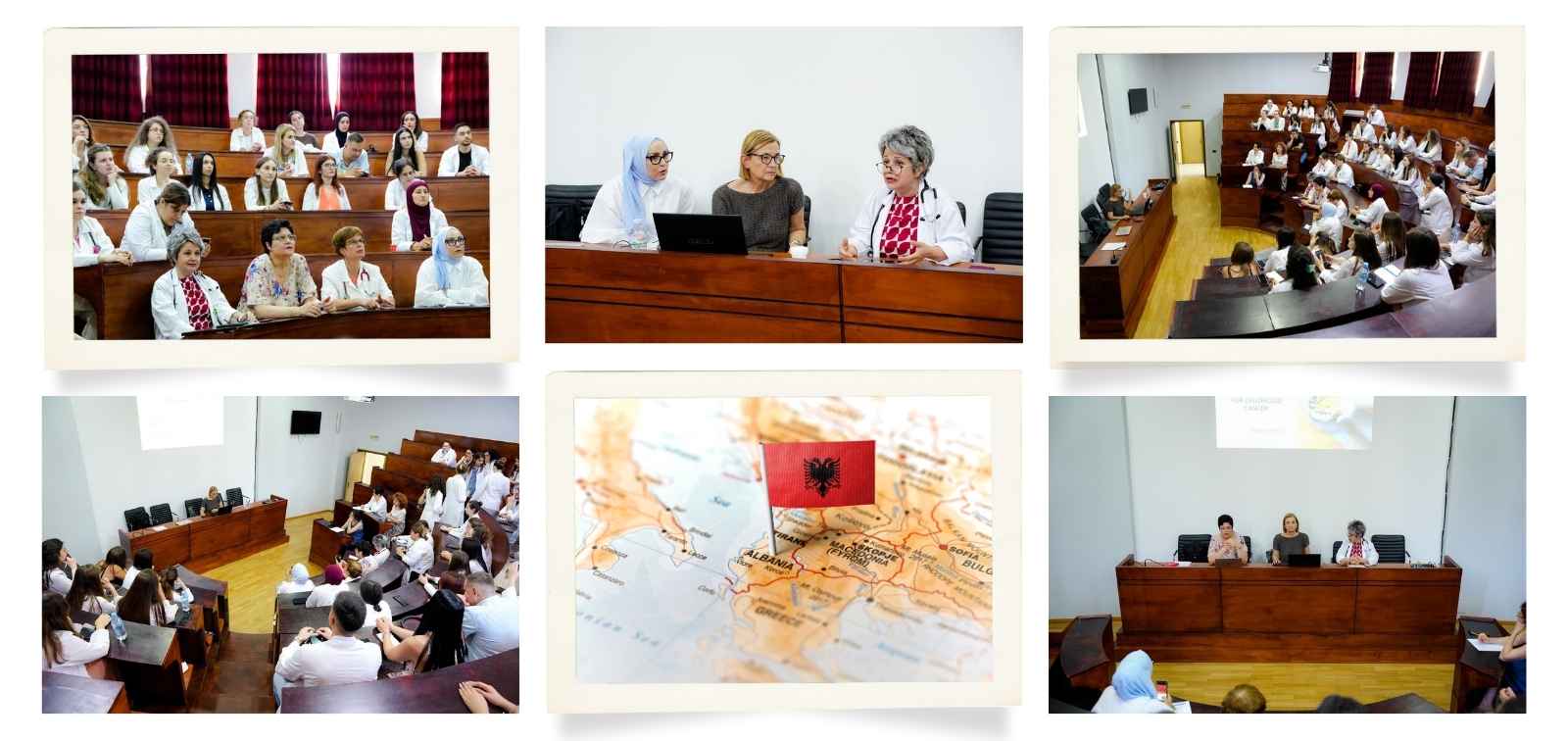
One of the most meaningful international experiences was my visit to Tirana on July 7-8, 2025, at the invitation of Dr Donjeta Bali, Head of Pediatric Hematology and Oncology and at that time the Director of the University Hospital Centre “Mother Theresa”. The visit included meetings with hospital management and the Deputy Dean of the Medical Faculty, as well as lectures attended by around 70 participants, including pediatricians, pediatric residents, and specialists and residents in internal medicine.
The warm welcome in Tirana was unforgettable. During open discussions, well beyond the formal presentations, it became clear that long-term follow-up for childhood cancer survivors is currently not yet available in Albania. This underscored the importance of establishing organized survivorship care pathways, which could serve as the foundation for future improvements and digital solutions. Colleagues expressed strong interest in developing these programs, showing openness to European collaboration and the potential benefits of projects like e-QuoL.
Bosnia and Herzegovina: strong professional interest and concrete progress
In Bosnia and Herzegovina, I participated in the 27th Autumn Meeting of the Pediatric Association of the Republic of Srpska, held on October 24-26, 2025, in Jahorina. The invitation was initiated by Dr Jelica Predojevic, Head of the Division of Pediatric Hematology and Oncology in Banja Luka and President of the National Pediatric Society. The meeting brought together around 200 pediatricians, pediatric subspecialists, and pediatric residents.
The lecture was well received and followed by active discussion, reflecting a strong interest in survivorship care. In this context, it was particularly encouraging to observe the great progress achieved in Banja Luka in recent years. With the support of the PanCare Twinning activities and the e-QuoL project, a dedicated follow-up clinic has been established. Survivors are now monitored within the pediatric oncology setting—where they were originally treated—up to the age of 25. These achievements clearly demonstrate how targeted international collaboration and professional commitment can translate into tangible improvements in long-term survivorship care.
Skopje: addressing late effects on an international stage
Another important activity was delivering an invited lecture on late effects of the treatment for childhood cancer at the XXI Medical Congress of the Republic of North Macedonia with international participation, held in Skopje from 11 to 14 September 2025. The invitation was extended by Dr Svetlana Koceva, Head of the Division of Pediatric Hematology and Oncology, University Hospital Center “Mother Theresa”. With more than 300 participants, the congress provided an excellent opportunity to raise awareness of survivorship issues among a broad international audience and to emphasize the importance of follow-up as an integral part of cancer care.
Looking ahead: strengthening regional collaboration
Looking to the future, further international activities are already planned that will continue to strengthen collaboration and knowledge exchange within the Balkan region. In spring 2026, I have been invited by Dr Nada Krstovski, Head of the Division of Pediatric Hematology at the University Children’s Hospital in Belgrade, together with a parent organization “Nurdor”, to visit Belgrade and contribute to educational and professional activities focused on childhood cancer survivorship.
This planned visit highlights the increasing recognition of survivorship care as a priority for both healthcare professionals and families. It also emphasizes the importance of collaboration in shaping long-term follow-up and support, aligning closely with the core values of the e-QuoL project—education, collaboration, and active participation. It further shows how European initiatives can build sustainable networks to improve the lives of childhood cancer survivors.
Final thoughts
These international activities have further reinforced my belief that e-QuoL is not just about digital innovation, but about people, partnerships, and shared values. By fostering partnerships and creating opportunities for meaningful survivor involvement, the project helps build a more equitable, compassionate, and sustainable future for survivorship care across Europe. These experiences have also reaffirmed the importance of continued dialogue and collective responsibility in ensuring that surviving cancer truly means living well.

 Schweizerische Eidgenossenschaft