
News
Dialogues between Survivors and Caregivers: Healing Happens in Connection
12/02/2026
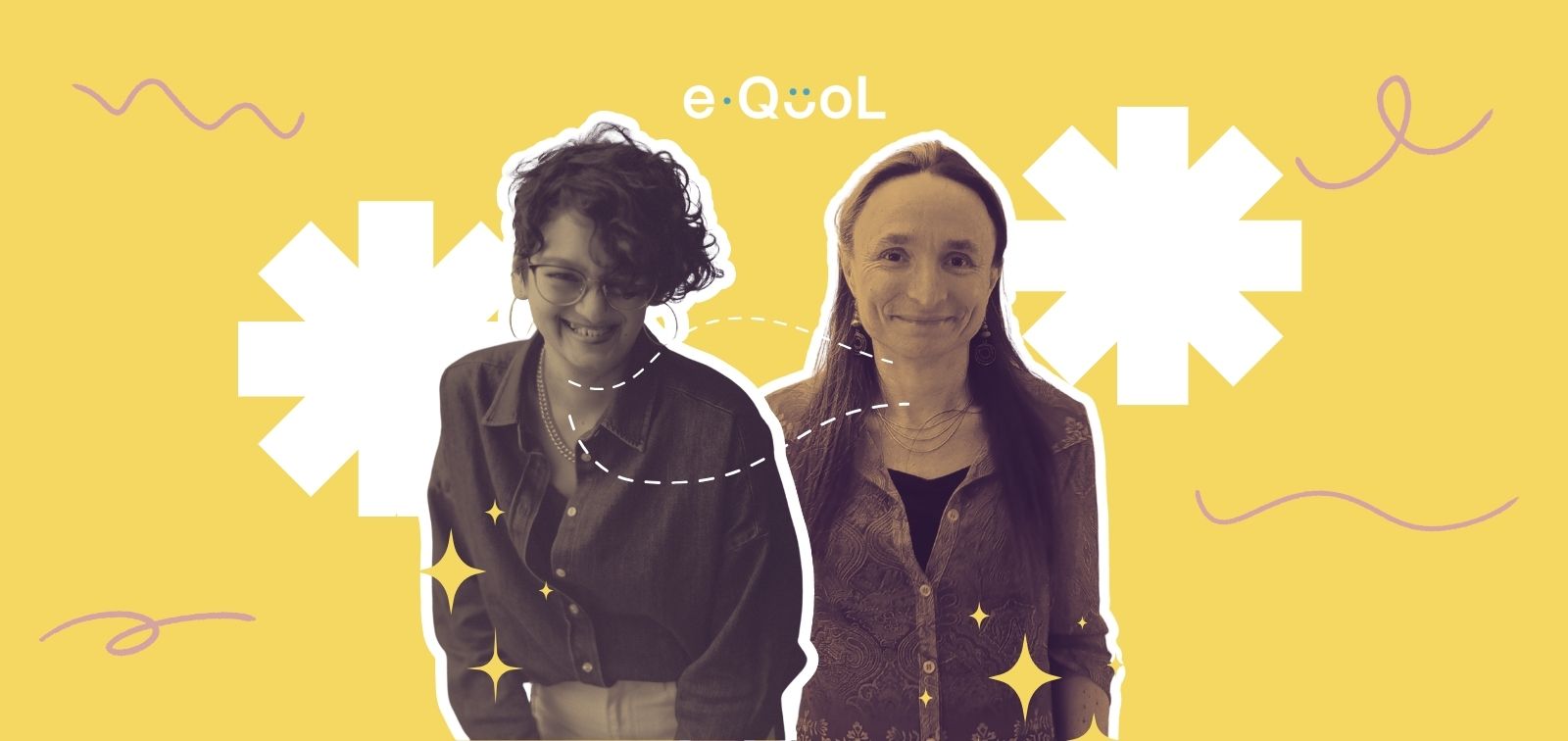
This article is part of the “Healing in Two Voices” series developed within the e-QuoL project, which brings together survivor voices and professional reflections on life after childhood and adolescent cancer. In this series, professional contributions do not aim to add explanations or conclusions. They create spaces for reflection — ethical, psychological, and clinical — opened by the testimonies themselves.
1
Franz Ruppert once said, “Trauma lives in isolation. Healing happens in connection.”
These words carry a quiet truth.
When pain stays hidden, it grows heavier, harder to name.
But when it is shared — gently, without judgment — something begins to shift.
Alone, we move forward, step by step.
But together, something different unfolds.
“The gaze of another becomes a mirror, not a judgment.”
“Words we didn’t dare to say find an echo.”
“Comparison gives way to recognition.”
And slowly, “we feel less alone with our body, our story, our after.”
Research in trauma psychology reminds us that relational safety is a cornerstone of healing.
To feel seen, believed, and welcomed, without having to explain or defend ourselves allows the body to soften, the mind to rest, and self-worth to rebuild.
Sometimes, what we need isn’t another piece of advice or one more thing to fix.
It’s a space where we can simply exist as we are, side by side, human among humans.
Because the opposite of trauma
is not strength —
it is connection.
If you’re walking this path, know that you don’t have to do it alone.
Reaching out, meeting others who understand, can be the first gentle step toward healing — together.
Laura Bathilde – a patient Les Aguerris – France
2
Reading her words, I can only nod in agreement.
Yes — healing happens in connection.
It happens in many ways: in a conversation that feels safe, in an association where others understand without needing long explanations, in a friend’s quiet presence, or in the attentive listening of a trained professional.
What truly helps is not always to find the right words, but to be heard — and believed — without having to justify oneself.
Because sometimes the world says: “You’re fine now, you’re healed.”
And yet, inside, something still needs time, gentleness, and space to breathe.
That’s where meeting others matters so deeply — to feel less alone, less “different,” and to rediscover that what we carry makes sense, even when we cannot explain it.
Being welcomed, even in silence, is already a form of healing.
Connection doesn’t erase the past,
but it makes it lighter to carry.

 Schweizerische Eidgenossenschaft