
News
Dialogues between Survivors and Caregivers: When Decisions Are Made Without Us
03/03/2026
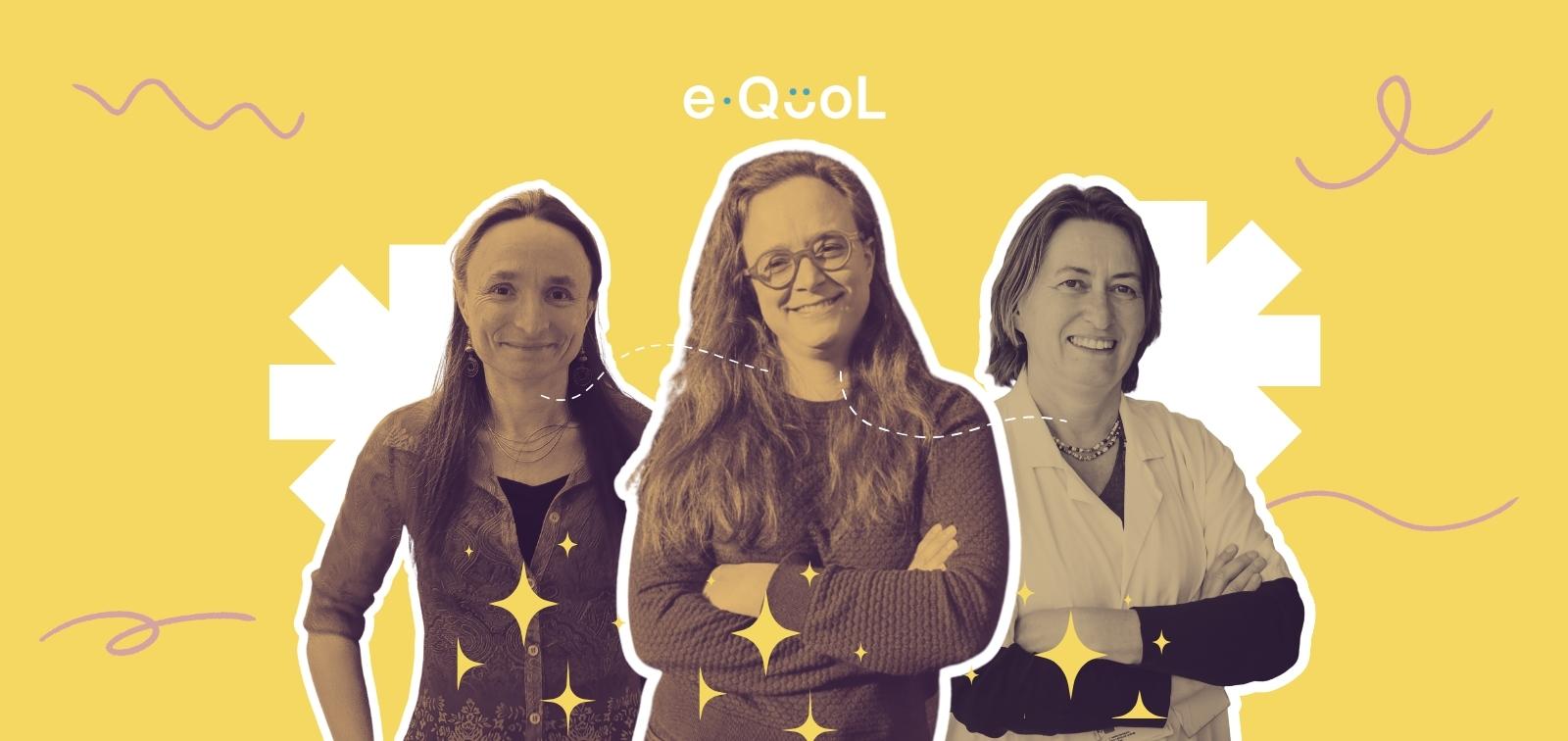
This article is part of the “Healing in Two Voices” series developed within the e-QuoL project, which brings together survivor voices and professional reflections on life after childhood and adolescent cancer. In this series, professional contributions do not aim to add explanations or conclusions. They create spaces for reflection — ethical, psychological, and clinical — opened by the testimonies themselves.
1
I was sick at age 12 and then again at age 15, and I felt that doctors and healthcare managers failed to communicate with me. They made decisions without consulting me or informing me directly. The burden of conveying this information fell on nurses or, most of the time, on my parents. The healthcare manager, whom I had never seen and never saw during my first bout with leukemia, never allowed my brother to visit me in the sterile ward, then allowed him to visit only sporadically when I was in the conventional ward. Why? “Because my brother had too many germs,” the nurses told me. At the age of 12, I asked several times to see this nurse manager, so that she could get to know me and understand. She never came, she never saw my brother.
I experienced this as a huge injustice and a profound lack of respect for the child that I was. It was as if “I was nobody to her” or “I was just a file number in a pile.” As I write these words, I still feel nauseous, sick to my stomach, and sad because she deprived me of precious moments with my brother, which I am convinced would have helped me psychologically.
Now, in the aftermath of cancer, I remain somewhat distrustful and vigilant towards healthcare managers or staff who make decisions but never come to see the patients.
Marlène Briand-Renaudet, a patient – Les Aguerris association, France
2
Reading these words felt like a punch in the gut. This testimony reminds us that we must always remain ethically alert so that no child—once they become an adult—is left with this pain deep inside, regardless of how long it has been since their cancer treatment.
I am a senior pediatric nurse in a pediatric oncohematology department. Reading your words resonates with what we have been working on in our unit to ensure that this never happens again.
Supporting children in pediatric oncology is always a story of unique encounters between the child, their family, and the caregivers. The shared experience imposed on everyone requires certain rules to be established. These rules guarantee the safety of care. They also allow us to communicate with the child in a consistent manner, without dividing them into “good guys and bad guys.” Meeting the children, talking to them, responding to them—even when the rule is the rule—is part of the care process.
But a unique response must be provided to the needs of each child.
This response is a source of tension between conflicting logics: that of the needs of the child and their parents, and that of the care, services, and hospital institutions.
The very definition of an ethical approach is the analysis of these tensions between values to be preserved and needs to be met. The consequences of every action and every word must be considered collectively in order to provide a single, unified response.
Furthermore, ethics invites us to know and keep in mind the face of the person for whom we are acting.
No one should be able to impose rules without discussing them with the person concerned. What I take from your words is that more than the prohibition itself, it was the lack of a meeting to discuss it that hurt you. Meeting with the patient, even to explain a rule that cannot be broken at that moment, is tantamount to treating them with respect.
The time spent in this meeting marks the encounter between two individuals, not really on equal footing, but where the one who holds the rules sets the time for the meeting.
Of course, it is not easy for a manager to make themselves vulnerable by explaining points that they know will be difficult to hear. But this vulnerability meets the vulnerability of the child. And that is when the care relationship can unfold, even with a healthcare executive.
This demand for respect is also found in autonomy, the right to clear and appropriate information, and the search for consent for the care that concerns the child.
No one should be able to deviate from this without violating the spirit of care and respect for others.
Being a healthcare manager is a wonderful profession; it should inspire confidence and security, not pain and misunderstanding. I hope that this was a thing of the past, now gone forever. The rights of our young patients are evolving, and so are our roles.
I hope that never again will a child who has grown up recall this pain when thinking of the healthcare manager in their hospital ward.
Sophie Laroche. Puéricultrice cadre de santé – Oncohématologie pédiatrique CHU Caen Normandie, France
Reading this story, I think of all the former patients who return for consultations years later, with silent vigilance. This is not a weakness: it is a memory.
And this memory influences everything that follows: trust, the ability to ask questions, to say no, to ask for support.
Through the testimonials and stories, we realize how much certain wounds come not from the treatments, but from what was not said, not explained, not encountered, misunderstood.
Care is not only about medical safety, but also about consideration, and healing is not just the absence of disease.
It also involves feeling respected, heard, and considered.
As a long-term follow-up physician, I have one requirement: not to let former patients carry the burden of unspoken words or missed encounters alone for years.
Because sometimes, an explanation given at the right time does not change the rule—but it changes the mark it leaves.

 Schweizerische Eidgenossenschaft