
News
A Dialogue between Survivors and Caregivers: Learning to Live with Fatigue and a Different Body
20/04/2026
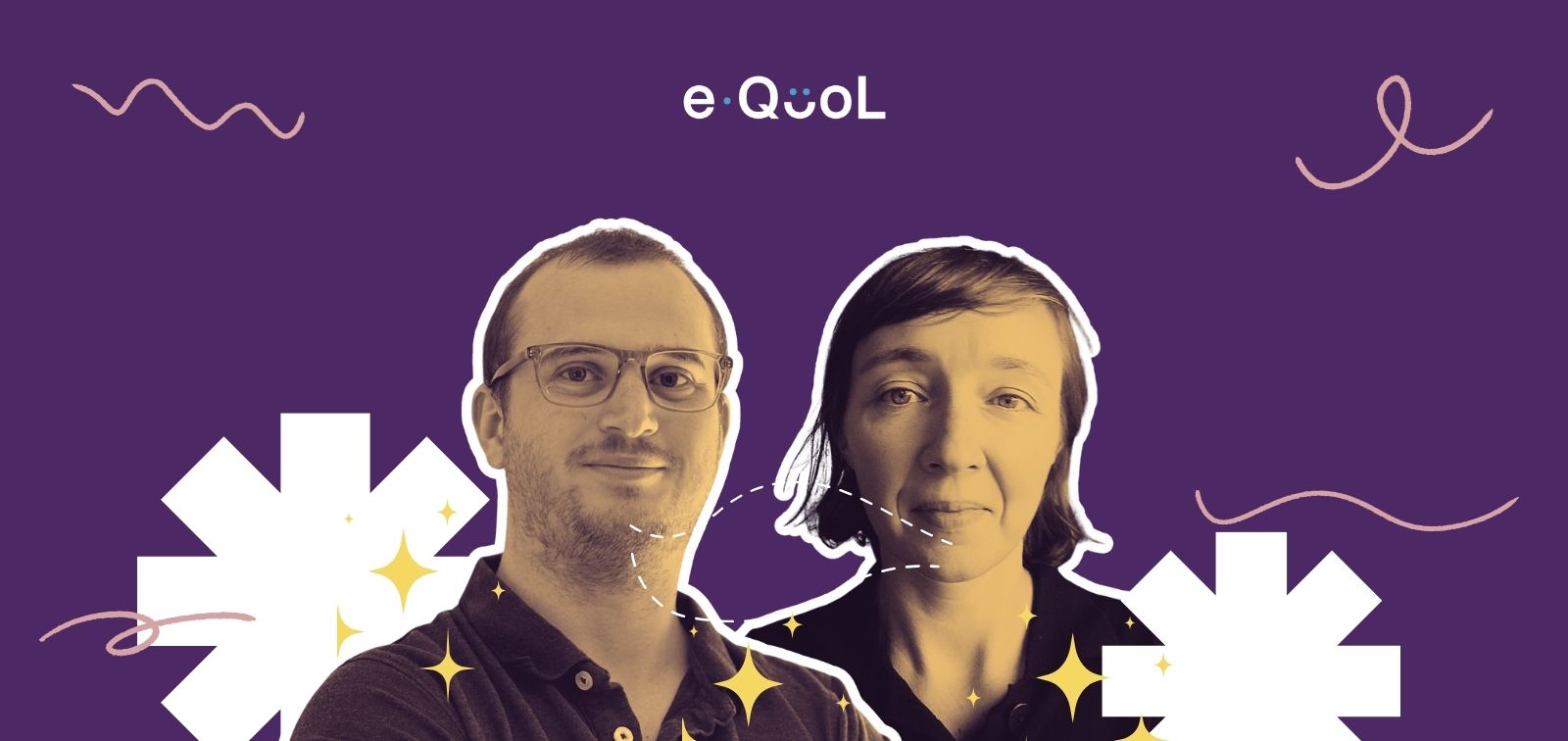
This article is part of the “Healing in Two Voices” series developed within the e-QuoL project, which brings together survivor voices and professional reflections on life after childhood and adolescent cancer. In this series, professional contributions do not aim to add explanations or conclusions. They create spaces for reflection — ethical, psychological, and clinical — opened by the testimonies themselves.
1
When treatment ends, people often talk about being cured. But living in your body after childhood cancer is often more complex than the idea of a simple “return to normal.”
First, because even after I was considered cured, I continued to go regularly to the hospital between the ages of thirteen and eighteen for check-ups and X-rays. During that period, when I was officially cancer-free, I also underwent two small operations indirectly related to the cancer.
Over time, I also realized that my body was no longer quite the same. Some things are visible: a scar, slight asymmetries, a toe that does not bend properly. Others are much more subtle: fatigue, digestive problems. None of this prevents me from living my life, but it does require constant attention.
At only twenty-six, I sometimes find myself recognizing a phrase that is often heard from people over thirty: “I’m not twenty anymore.” After a night out, I know my body will quickly remind me the next day. If I drink alcohol, the following day will be harder. If I sleep too little or keep irregular hours, my body does not forgive it.
I do not always know to what extent these fragilities are related to the cancer or simply to my metabolism. Perhaps they were always there and I notice them more now as I rediscover my body as an adult. But they are now part of my everyday life.
Around the age of twenty, I started boxing. It was a sport I had loved since childhood thanks to Rocky and the manga Hajime no Ippo. At first I was really not good at it. But little by little, I stopped feeling ridiculous. Sport became a way to regain control and rebuild trust with my body.
At the same time, I learned that I cannot push my body in just any way. If I overdo things or train badly, my body quickly reminds me of my limits.
Today, running, cycling, or training is not only about performance. I know that I sometimes have to make more effort than others to stay in shape, but those efforts are worth it. They make me happier in the short, medium, and long term.
After childhood cancer, the body is not always a body “like any other.” It can be more fragile, more demanding. But today I feel rather comfortable in my body, and I try to remember that health is a balance that must be built every day.
Arthur Kayser – A French survivor
2
The words of Arthur remind me of a 40-year-old man, Sebastian, who had cancer when he was an adolescent, who reported in an interview that he felt as he had “a lifelong disability” because of his fatigue and that his body seemed “to be aging faster than others”. Like Arthur, and other adults treated for childhood cancer that I met in my researches, he wondered what was due to cancer, its treatments, or aging. However, when comparing with other peers of the same age, he felt that something was different.
The experience of childhood cancer can profoundly disrupt the embodied sense of self, leaving lasting traces, both physical and psychological. After childhood cancer, the body may carry invisible stigmas, influencing how one is perceived and, in turn, how one perceives oneself. The body, as a social construct, is never neutral; it is shaped by the gaze of others and the narratives of illness and recovery.
Sebastian was treated in the 1990’s, and he did not benefit from long-term follow-up clinics that were created in the recent decades. In line with the broader shift toward holistic patient care, healthcare professionals working in these clinics are increasingly aware of the significant impact of fatigue and other invisible sources of limitations. By incorporating survivors’ voices into clinical practice and public discourse, as in the e-QuoL project, we are moving toward a model of care that takes into account the complexity of survivors’ lives, not only as patients, but also as individuals navigating a world that often fails to perceive the invisible burden they carry. Testimonials like the one from Arthur can help others bridge the gap between the bodies they inhabit and the society in which they live, fostering a sense of belonging and understanding that is sometimes lacking.

 Schweizerische Eidgenossenschaft