
Resources
Learning to Live with Risk
07/09/2026
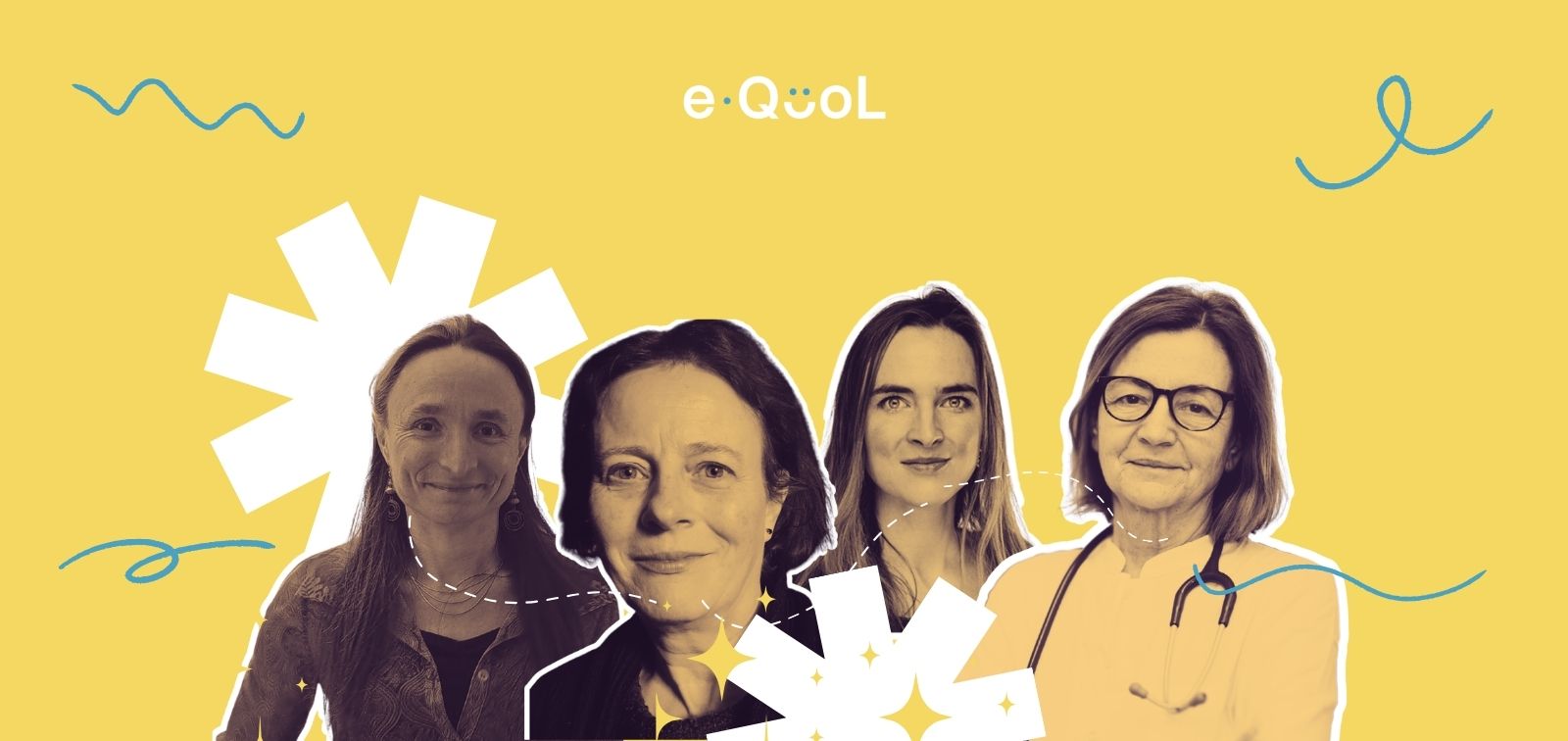
This article is part of the “Healing in Two Voices” series developed within the e-QuoL project, which brings together survivor voices and professional reflections on life after childhood and adolescent cancer. In this series, professional contributions do not aim to add explanations or conclusions. They create spaces for reflection — ethical, psychological, and clinical — opened by the testimonies themselves.
1
I recovered from cancer when I was 11 years old. As an adult, I developed two more cancers, 30 and 35 years after my first one. These so-called secondary cancers were directly linked to the treatment I received during childhood, but I only learned that much later.
At the end of my teenage years, when my post-treatment follow-up came to an end, I wasn’t given any specific recommendations. That was simply the standard practice at the time.
For me, the cancer chapter was definitively closed. I had never experienced a relapse (in fact, I don’t think I had ever even considered that possibility), and I didn’t know anyone who had developed more than one cancer.
So I entered adulthood firmly believing that cancer only happened once in a lifetime. I truly felt I could move on and fully enjoy the rest of my life’s journey. As far as my health was concerned, I simply followed the screening recommendations for the general population. Fortunately, I did.
The second cancer, discovered during a routine medical appointment, shook me deeply.
WHY? Was it connected to my childhood cancer?
My oncologist reassured me that it wasn’t (which turned out to be wrong), explaining that it was a completely different type of cancer (which was true). Because it had been detected at a very early stage, I only needed what I considered to be “light” treatment. No chemotherapy, which, in my mind, meant it wasn’t that serious.
I vividly remember my last consultation:
“That’s it, everything is finished. Just continue with your usual follow-up.”
“But what if it happens again?”
“For this type of cancer, the risk of recurrence is only 2%.”
“Yes, but when you’re part of that 2%, it’s 100% cancer!”
And that was the end of the conversation.
So I pushed this new fear aside. Determined to forget something that should never have happened, I picked up my life exactly where I had left it.
Five years later came the very special moment of my first long-term follow-up consultation. That was when I learned that the radiotherapy I had received as a child could lead to second cancers many years later. It explained my second cancer. Almost at the same time, I was diagnosed with a third cancer (yet another different one), because an examination was carried out immediately during the consultation for people considered to be at risk.
Psychologically, it was overwhelming. There was simply too much to process: treatment for a third cancer, learning about the long-term effects of childhood cancer treatment, coming to terms with the denial I had been living in since my second cancer, and looking back at my first cancer through the eyes of an adult. I had to completely rethink my relationship with cancer, with my health, and with life itself. Fortunately, I was very well supported throughout that journey.
Looking back today, I realise how fortunate I have been. At a time when knowledge about long-term follow-up after childhood cancer was still limited, the screening recommended for the general population, followed later by specialised long-term follow-up, helped me avoid much more serious consequences.
Still, I believe that if someone had told me earlier about this risk, my journey might have been less bumpy and gentler.
Living with the risk of a second cancer feels both distant and very close at the same time. It seems distant until you are confronted with another diagnosis, yet it remains close because of the lasting memories and experiences we carry from having had cancer as a child.
It is a frightening possibility—one that we gradually have to come to terms with and learn to live alongside as peacefully as possible. With the support of knowledgeable healthcare professionals who can answer our questions, we learn to better understand that risk without underestimating it or letting it take over our lives. And when we have the opportunity to talk with other survivors who have gone through similar experiences (and there are more of us than people might think), we feel less alone. We find understanding and support. It takes time, kindness and patience. Seeing the words risk and cancer together in the same sentence is never easy.
And because screening and surveillance are available, we can do more than simply wait and hope for the best. Personally, I fully embrace long-term follow-up, although, to be honest, it never becomes completely comfortable. How could it? My own experience has shown me the value of early detection, and I now understand just how important it is for me. So yes, I still grumble every time I have to book another screening appointment. Sometimes I put it off for a while. But I do make the appointment. And I go. They’re not pleasant moments, but they’re a small price to pay.
Sabine, a French CAYACS, Les Aguerris
2
Sabine’s story reminds us that learning about late effects years after treatment can be deeply unsettling. Il also reflects an experience shared by many childhood, adolescent and young adult cancer survivors. Learning that previous cancer treatments may increase the risk of developing a second cancer can be unexpected and emotionally challenging. It can also be difficult to understand why follow-up and screening recommendations may differ from those for the general population.
Today, cancer screening is becoming increasingly personalised. Rather than relying only on age, recommendations are progressively taking into account each person’s individual level of risk, including family history, genetic predisposition, lifestyle, environmental and occupational exposures and, for cancer survivors, the treatments they received. This allows healthcare professionals to recommend follow-up that is tailored to each person’s medical history.
We also recognise that regular screening and follow-up appointments can be stressful. They may bring back memories of cancer or raise fears about what the next examination might reveal. These feelings are completely understandable and are never the purpose of follow-up.
Screening is recommended only when there is good evidence that it can make a difference—by detecting a cancer or another health problem at an early stage, when treatment or intervention is more likely to be effective. Having an increased risk does not automatically mean that screening is needed, and not every late effect can or should be screened for. The goal is not to create anxiety or to look for problems unnecessarily, but to offer the right surveillance to the people who are most likely to benefit from it.
If you have questions about your own level of risk or are unsure why a particular examination has been recommended, don’t hesitate to discuss them with your healthcare team. Understanding the purpose of your follow-up can help you make informed decisions and feel more confident and supported throughout your survivorship journey.
Dr Charlotte Demoor-Goldschmidt, Survivorship Medical Doctor expert – Radiotherapy oncologist, CHU Angers, CHU Caen, Inserm U 1018, France
3
Sabine’s story reminds us that survivorship is not only about recovering from cancer, but also about understanding the possible long-term effects of treatment. For some survivors, this includes an increased risk of developing a second cancer, known as second primary malignancy, sometimes many years after treatment.
This risk varies from person to person. It is influenced by several factors, including the type of childhood cancer, the treatments received, age at diagnosis, family history, lifestyle habits, and, for some people, genetic predisposition. While treatments such as radiotherapy and certain chemotherapies have greatly improved survival, they may also increase the risk of second cancers later in life. Some survivors may also have an inherited genetic predisposition that contributes to this risk.
Understanding these factors allows healthcare professionals to tailor long-term follow-up to each survivor’s individual needs. Discussing family history and, when appropriate, offering genetic counselling or testing can help clarify a person’s level of risk and guide personalised care. Importantly, learning about risk is not about creating fear, but about supporting informed decisions and promoting long-term health.
An increased risk does not mean that another cancer will inevitably occur. Most childhood cancer survivors will never develop a second cancer and can expect to live long, healthy, and fulfilling lives. The purpose of long-term follow-up is to detect potential health problems early, when treatment is often most effective, while providing survivors with the knowledge and support to live confidently beyond cancer.
Living with uncertainty is not easy, and every survivor experiences it differently. As healthcare professionals, our role is to provide appropriate follow-up, to listen, answer questions, acknowledge concerns, and help survivors understand their individual risk. Our goal is to ensure they feel informed, supported, and confident in living well beyond cancer.
Jelena Roganovic, pediatric oncologist, Zagreb, Croatia
4
Learning that you may have an increased risk of developing another cancer can bring up many emotions. Fear of cancer recurrence or developing another cancer is one of the most common concerns among cancer survivors. These worries may be especially strong around follow-up appointments or screening tests.
Some level of worry is a normal response to uncertainty. However, if these fears become overwhelming, interfere with your daily life, or lead you to avoid medical appointments or screening, it is important to seek support. Talking with a psychologist or another healthcare professional with experience in cancer survivorship can help you find ways to manage these fears, so they have less impact on your daily life. You do not have to face these fears alone.

 Schweizerische Eidgenossenschaft