
Resources
Finding What Works for You
08/09/2026
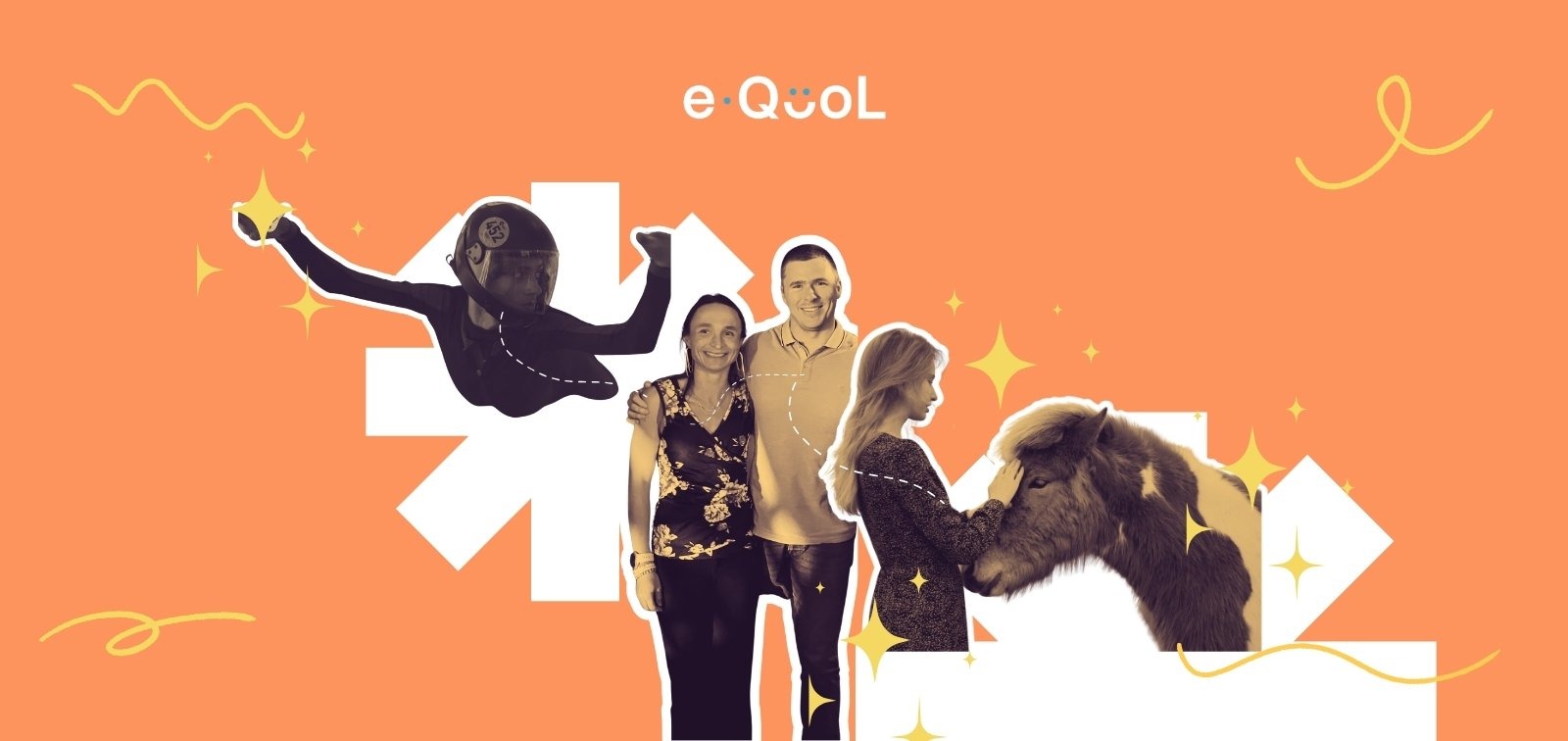
This article is part of the “Healing in Two Voices” series developed within the e-QuoL project, which brings together survivor voices and professional reflections on life after childhood and adolescent cancer. In this series, professional contributions do not aim to add explanations or conclusions. They create spaces for reflection — ethical, psychological, and clinical — opened by the testimonies themselves.
1
My name is Paul-Loup, I am 17 years old. I was born with a brain tumour that affects my mobility, especially my legs. I use a wheelchair. At secondary school, I had serious problems fitting in, with bullying from students and some teachers.
And I wanted to leave school.
Thanks to my sports teachers, and especially my teaching assistant, who was himself a sportsman, I was able to keep going and finish my final year of lower secondary school.
It was in this difficult context that I discovered adaptive indoor skydiving, indoor skydiving adapted for people with disabilities. It is a recent discipline that has been developing since 2020 and held its first World Cup and European Championships this year. With the support of my parents and the Handicap Fly association, I embarked on the adventure.
I have always loved sport, and I had finally found a sport where my movements were fluid and did not hurt. I started competing after two months and went on to achieve podium finishes in France and internationally. I discovered an incredibly welcoming and supportive community that gave me back my self-confidence.
And I fitted into the skydiving community without difficulty, something I had not managed to do at secondary school. In sport, we are all passionate about the same thing, so it is much easier to talk.
Moving to another region allowed me to join a much more tolerant school that is involved in supporting my sport. When I travel to competitions, about once a month, the school sends me lessons so that I can catch up during waiting periods, particularly at airports. And when I come back, everyone congratulates me on my podium finish.
Paul-Loup, French CAYACS
2
After my chemotherapy, I felt disconnected from my body, as if I were living beside myself. A healthcare professional told me about “equine-assisted therapy”. I did not understand, but I had remembered the word “therapy”… Not even something I could consider…
Then, more than 10 years later, a friend told me again about equine-assisted therapy organised by an association, and once again I hesitated for a long time before trying it… But this time, it was not the word “therapy” that I had remembered, but the activity around the horses.
From the very first session, the contact with the horse deeply moved me: it was impossible to pretend, the horse sensed each of my emotions before I even understood them myself. Little by little, the gentle exercises helped me regain confidence in my movements and in my breathing. I cried, I laughed, and above all I learned to reconnect with my body without judging it.
This silent connection with the animal brought me back to the present moment, away from the fears that were still with me. Today, I am no longer the same person I was before the illness, but I have found a new, more peaceful balance.
Equine-assisted therapy was an essential step for me in rebuilding myself, both physically and emotionally. It was also the first place where I formed real friendships again after my illness.
Léa, German CAYACS
3
People always say that sport is a school for life. Beyond sporting skills, it develops human qualities and ways of being that will be useful in all the situations we may encounter throughout our lives: discipline, perseverance, listening, punctuality, teamwork, respect, commitment, questioning yourself, etc.
But sport also has this extraordinary power to help a person find their bearings again after a difficult period.
Self-confidence, social connection, reconnecting with and valuing your body… fundamental elements of our well-being, which can nevertheless sometimes be so difficult to regain or develop in our society today. In this respect, sport, and even more so parasport for a person with a disability, is an incredible driving force!
After losing my leg at the age of 6, it was not easy to immediately find a sport in which I could truly express myself. Discovering wheelchair fencing at the age of 8 was fundamental, because I discovered an environment where people understood my difficulties while encouraging me to develop my independence and see the positive side of things, beyond the sport itself, which I truly fell in love with.
I know that I owe everything to sport. It gave me a taste for challenge, the desire to push my limits, and helped me learn to live with and strengthen this new body.
Later, high-level sport allowed me to meet incredible people who became a second family, to travel to countries I would probably never have discovered otherwise, and to no longer be recognised first as a person with a disability who does sport, but as a champion.
Illness, an accident or events in life can seriously damage our bodies, but also our self-esteem. I do not believe in the saying “what doesn’t kill you makes you stronger”, but if you are struggling or feel that you have lost your bearings, sport can be an excellent way to help you stop seeing this painful episode as an ending, but rather as a turning point, a step before a new, rich and exciting life that you will build little by little.
You can look for performance later if you want to, but to begin with, the only thing that matters is having fun and enjoying yourself.
What matters is finding what works for you. For Paul-Loup and me, that was sport.
Ludovic Lemoine, French CAYACS, three-time Paralympic medallist in wheelchair fencing
4
One of the messages I would like every young person reading these stories to remember is that difficulties with inclusion do not mean that there is something wrong with you.
When a young person experiences bullying, rejection or exclusion, it is easy to begin believing that they do not belong. Paul-Loup’s experience reminds us that sometimes the problem is not the individual, but the environment around them. Finding people who see you for your abilities, interests and personality—rather than mainly through the lens of cancer or disability—can make an enormous difference.
These stories also show how an activity can help us reconnect with our bodies in a different way. For Paul-Loup, adaptive indoor skydiving offered a way of moving freely and without pain. For Léa, being with horses gradually helped her reconnect with her body and emotions without judgement. For Ludovic, wheelchair fencing became a way to develop autonomy, rediscover and strengthen his body, and eventually pursue high-level competition.
But performance is not the goal for everyone, nor does it need to be. Sport can offer pleasure, movement, confidence, social connection and a chance to experience your body through what it can do, rather than only through its limitations or what it has been through. Sometimes, simply enjoying an activity and feeling comfortable doing it is already meaningful.
Léa’s experience also reminds us that timing matters. Something that feels impossible or unappealing at one point in life may feel very different years later. Even the words used to describe an activity can influence whether we feel ready to try it. There is no need to force yourself into something simply because someone else thinks it may be good for you.
And it does not have to be sport. For someone else, it might be music, art, volunteering or another activity that brings pleasure, meaning or connection with others. What matters is finding something that feels right for you, when it feels right for you.
These experiences also remind us how important other people can be along the way: a friend who suggests an activity, a teacher or teaching assistant who believes in you, a coach who understands your abilities, a family member who supports you, or simply people who welcome you into a community.
There is no single path to rebuilding confidence or reconnecting with your body and with others after cancer. What helps one person may not help another, and what does not feel right today may become meaningful later. The important thing is to have opportunities to explore, at your own pace, what brings you pleasure, confidence, connection or simply makes you feel good.

 Schweizerische Eidgenossenschaft