
Resources
Different Paths to Parenthood After Cancer
07/09/2026
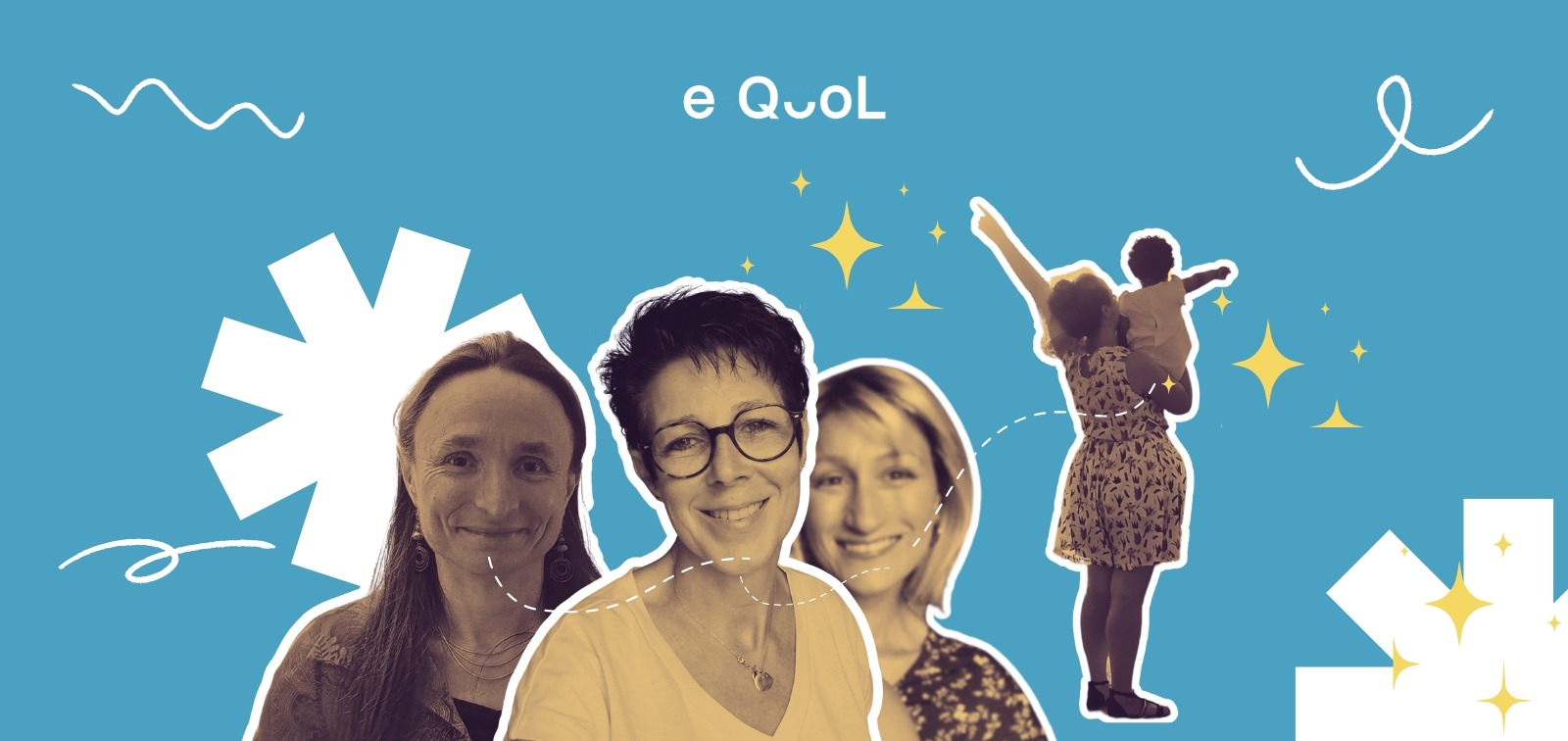
This article is part of the “Healing in Two Voices” series developed within the e-QuoL project, which brings together survivor voices and professional reflections on life after childhood and adolescent cancer. In this series, professional contributions do not aim to add explanations or conclusions. They create spaces for reflection — ethical, psychological, and clinical — opened by the testimonies themselves.
From teenage, childhood cancer to family life, Marlène, Cecile, Natasha’s journey shows how hope, love and resilience can shape a beautiful future—against all odds.
1
In 2004, I was 16 years old when, after an interview with the oncologist who had been treating me for four years, I heard the words: “It will be very difficult for you to become a mother—if not impossible.” It was the third blow I had suffered after the leukaemia diagnosis and then the relapse. My world collapsed. I felt completely alone.
After that shock, I began to see my belly as a bottomless pit that grew deeper with each passing year. I was angry—at that doctor and at all the medical staff who had hidden this truth about my body, my health. I kept it all bottled up, buried deep inside, while showing the world a smiling face. Who could possibly understand what I was going through? I even began to wonder what the point of living was.
In 2007 I met my partner and I told him almost everything about my life story. By 2010, I felt ready to become a mother. Together, we made appointments with several gynaecologists and fertility specialists. Depending on the professional, the reactions ranged from crushing to hopeful. One said to me, “There’s nothing there, why did you even come to see me?”—referring to my reproductive system. A few weeks later, another specialist counted the remaining follicles that had survived the intensive chemotherapy, including a particularly harsh treatment before my stem cell transplant.
After many painful experiences in hospitals, we quickly decided not to use assisted reproductive technology. Instead, we embarked on the path of adoptive parenthood. This journey too had its ups and downs, but we remained as strong as ever and deeply committed to becoming parents—committed to welcoming a child who was looking for the best possible parents.
And then, in 2019, we received “the magic call.” After 9 years of emotional gestation, a wedding and official adoption approval, we found out in less than a minute that we were finally parents. We cried tears of joy and slept only three hours that night, overwhelmed with happiness and emotion.
Less than a month later, we were with her—our daughter, our precious one. We spent three months together in her country of birth, Madagascar, in a bubble of love and transition. Since then, without a doubt, we have been the happiest people on Earth. Life as a family of three is beautiful and proves that we have defied many expectations.
We are proud of our family, of our unconventional paths and of the differences and similarities that unite us. Parenthood is not what we thought it would be… it’s even better.
To life!
Marlène, a French CAYACS, Les Aguerris association
2
It was over for me: I wouldn’t have a child, I wouldn’t carry a child. You have to accept it—especially since there are times when it feels like all you see are pregnant women around you. It’s horrible.
Then we submitted an application to adopt a child. I had to involve the pediatric oncologist so they would understand that yes, I had cancer, it’s true. But it was several years ago, and today everything is fine—physically, at least. I walk with a crutch, but I live a normal life.
From there, we waited. There was nothing else to do. The file was complete. We had the approval—we just had to wait. And fortunately, we got that approval. We waited a year for each of them, and we were able to adopt two little Parisians.
It was the most beautiful gift in the world.
Cécile, a French CAYACS, Les Aguerris association
3
I was 15 when I was diagnosed with Hodgkin’s lymphoma, a blood cancer. It was in 1989, totally unexpected and I was shocked; what would the future hold? I had high-dose radiotherapy followed by chemotherapy. And here I am now, aged 51 on the other side of that challenging moment. Back then, I would have loved to meet someone who was 51 and hear their story. So today, I have the privilege of being that person for you.
When I went into remission and never relapsed, I felt like I had been given a new life. I had changed, matured. I carried scars and memories, but I understood that life had been given back to me and I took it and run with it.
I met my husband when I was 17, fell in love and got married. We’ve just celebrated 30 years of marriage; like a real-life Cinderella story. We’ve travelled the world, had fun and still do. We have also been able to build a family too, with four children and one grandson. Looking at them, I am constantly reminded that despite struggles, doubts, pain and suffering, life is also beautiful.
To a teenager or young adult reading this :
Your story is still being written. I want to pass you the baton in this relay of life. Every lap of your running track, whatever that looks like, is a new victory. You’ll have moments where you feel tired, even fed up. But keep going. You’ll be amazed at how strong you already are. Life isn’t just about surviving, it is about overcoming and becoming the unique person the world needs.
Let’s hope and love carry you forward, with the belief that good things are on their way. May you, too, experience a resurrection into life, just as I have.
May your story become a triumph.
Natasha, an English CAYACS
4
One important message I would like every young person reading these testimonies to remember is that fertility and parenthood are not the same thing.
After cancer, many people worry about their ability to have children. These concerns are completely understandable. They may arise during treatment, years later when a family project begins to take shape, or unexpectedly when friends, siblings or colleagues start having children.
As healthcare professionals, we often focus on fertility because it is something we can assess, monitor and discuss medically. Yet parenthood is much broader than biology alone.
It is also important to remember that fertility after childhood, adolescent or young adult cancer is not always predictable. Some people experience reduced fertility, some remain fertile despite intensive treatments, and for others the answer is uncertain until fertility is assessed. Even if fertility preservation was not possible before treatment—or was never discussed—it is never too late to ask questions about your reproductive health and the options that may be available to you. Reproductive medicine also continues to evolve, meaning that today’s possibilities may be different from those that existed when your treatment ended. For this reason, it is worth asking these questions again over time, even if you were told years ago that your options were limited.
The stories of Marlène, Cécile and Natasha remind us that there is no single path to becoming a parent and no single definition of motherhood. They also remind us that many survivors first have to grieve the parenthood they had imagined before discovering a different path that can be just as meaningful. For some, this journey leads to biological parenthood; for others, to adoption, fostering, step-parenthood or other ways of building a family. Some people also choose not to have children at all. Every path is valid.
It is also important to recognise that fertility assessments themselves can be emotionally challenging. Making an appointment, having blood tests or ultrasound examinations, waiting for results, or discussing reproductive potential with a specialist may bring hope, but also fear, sadness, anger or uncertainty. Sometimes these moments reactivate memories of cancer and treatment. Sometimes important information is received while sitting alone in a consultation room, reading a report at home or opening a message on a phone.
If these discussions become difficult, you do not have to face them alone. A partner, family member, friend, psychologist, fertility specialist, healthcare professional or patient organisation can help you navigate these questions and the emotions they may bring.
Perhaps the most important message is this: a history of cancer may influence the path to parenthood, but it does not define a person’s capacity to love, to care for a child or to build a family. Families are created in many different ways, and every journey deserves the same respect. Families are created in many different ways, but they are all built on the same foundations: love, commitment and care.

 Schweizerische Eidgenossenschaft