
Resources
A Year of New Life: My Son, My Strength, and My Remission
07/09/2026
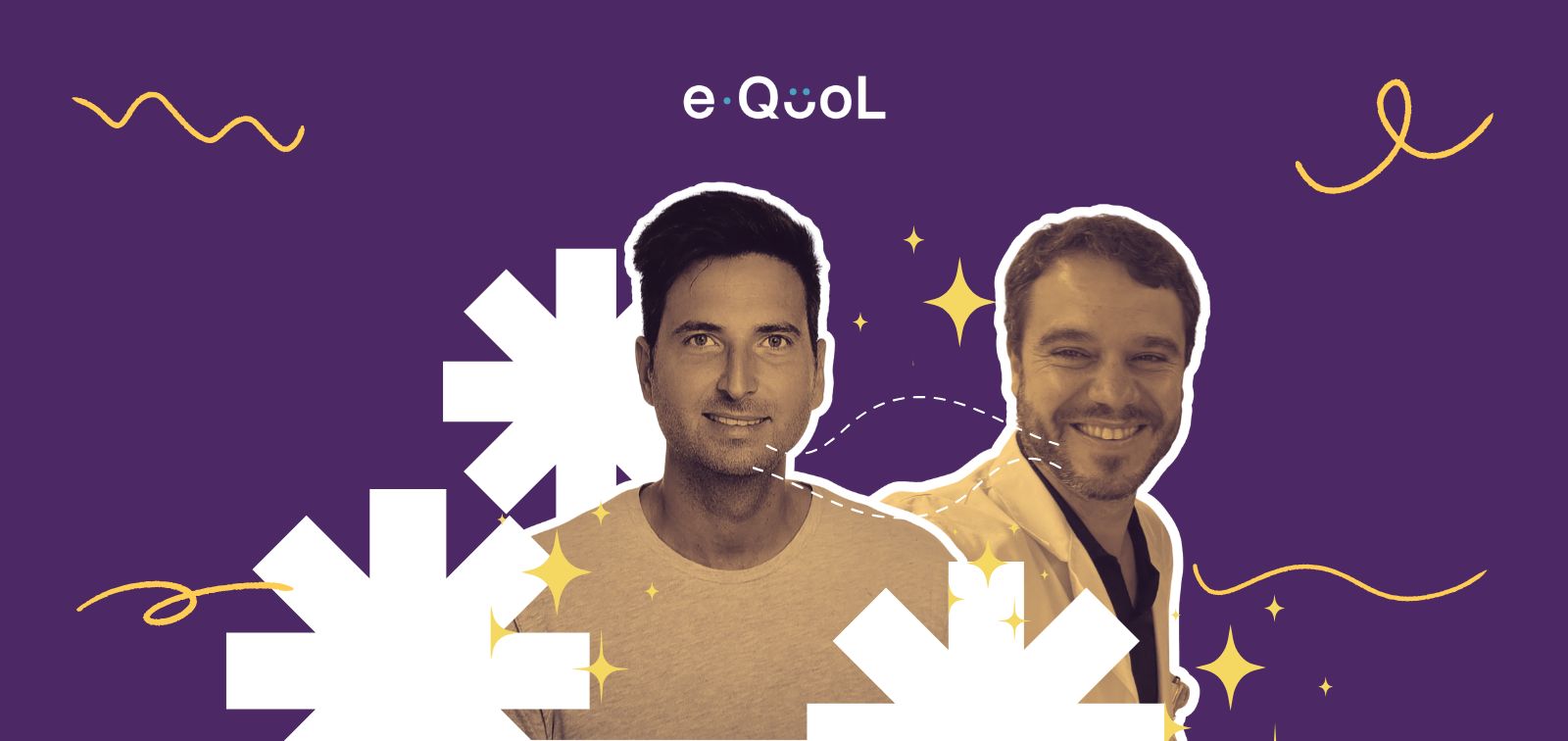
This article is part of the “Healing in Two Voices” series developed within the e-QuoL project, which brings together survivor voices and professional reflections on life after childhood and adolescent cancer. In this series, professional contributions do not aim to add explanations or conclusions. They create spaces for reflection — ethical, psychological, and clinical — opened by the testimonies themselves.
1
My son was born, and with him, I felt a new version of myself being born too. Those first few months were the most beautiful of my life: learning to be a father, discovering a different way of looking at the world, and cherishing his every smile and milestone. Everything was new, intense, and perfect.
But when he was just six months old, my life turned upside down. I was diagnosed with cancer: Hodgkin’s lymphoma. I couldn’t wrap my head around it. How could this happen just as I was finally entering a chapter I had always dreamed of? In an instant, I went from the greatest joy of my life to the most paralyzing fear I had ever known.
My priority shifted away from my path toward becoming a teacher. My career, which I had worked toward for so many years with such hope, ground to a sudden halt. What used to be classrooms, lesson plans, and future students became hospitals, tests, chemotherapy, and treatments that left me physically and emotionally drained.
And just when it felt like I was starting to find my footing again, the relapse hit. Hearing that the cancer had returned was devastating. I felt rage, exhaustion, and terror. It was like being thrown back to the starting line just as I was learning how to breathe again.
Even so, every time I saw my son smile, I found a reason to keep going. He was my light. His tiny arms reminded me that I had to fight not just for myself, but to see him grow, to show him the world, and to be present in his life.
The road was not easy. There were days of deep darkness, moments when I thought I couldn’t take any more. But thanks to my wife and my parents, I was held up when I had no strength left. My wife was my unwavering companion, there through every treatment, every fear, every tear, and every small victory. My parents, with their infinite love, constant support, and selflessness, were my refuge when everything else was crumbling. Without them, none of this would have been possible.
After everything, came the autologous transplant. It was a brutal journey, fraught with uncertainty, side effects, and fear. But today, with a heart full of gratitude, I can say that I have been in remission for one year.
One year. Twelve months of life, of second chances, and of learning to believe again.
It’s not that everything went back to the way it was before. My body still carries the aftermath, the fear of relapse lingers in the silence, and my professional path is still waiting to be rebuilt. But I have discovered that I don’t need to have all the answers to keep moving forward.
I have learned to value what truly matters: health, family, and time spent together. I have learned that life doesn’t always follow the plan we envision, but we always have a choice in how we live it.
Today, I am a father. I am a survivor.
I am a son, a husband, a friend, and, though at a different pace now, I am still a teacher at heart.
And above all, I am deeply fortunate to have the people who sustained me when I needed it most, right by my side.
This year in remission is not just a number.
It is proof that hope exists, that love heals, and that even on the darkest days, there is always a reason to keep going.
Thank you to my son, for giving me strength. Thank you to my wife, for walking beside me. Thank you to my parents, for being my roots and my refuge.
Ramón, a survivor from Barcelona
2
Reading your words, it is impossible not to dwell on the image of your son. On how those tiny arms, a smile, or the simple hope of watching him grow could become a wellspring of strength when everything else seemed to be shaking.
Perhaps that is why I am reminded of an idea Viktor Frankl spent years developing: that human beings are capable of enduring extraordinarily harsh experiences when they find a why, something or someone worth moving forward for. I can envision how those little arms gave meaning to everything you were forced to carry, reminding you why it was all worth fighting for.
I believe that in the early stages, we can benefit from that “social push” from friends and family who, out of love and optimism, assure us that everything will be fine. But there are other moments when that is not enough, moments when anger, exhaustion, and fear occupy too much space, and when the well-meaning phrases of those around us fall short and can even invalidate our suffering.
In those moments, those of us who accompany you on this journey cannot rush things. We cannot yet impart our conviction that you will come out of this stronger; not yet. We cannot sustain you with platitudes alone. Sometimes, our role is simply to be there, by your side, holding space for the uncertainty, until you yourself manage to find that foothold, that reason to live.
Your story reminds me once again of the responsibility we bear as healthcare professionals. From the moment our paths cross, you will likely remember every sentence, every interaction, and every gesture from those of us who care for you. Every kind word or dismissive gesture you receive from us will leave a profound impact.
I believe we still have a long way to go. And while we continue to advance our techniques and treatments, we must also continue to cultivate what some have called high touch: that ability to be present, to listen, and to hold space. Because just as those tiny hands found a way to hold you up, our healthcare systems should also be prepared to sustain people when everything else seems to be tearing apart.

 Schweizerische Eidgenossenschaft