
News
Dialogues between Survivors and Caregivers – After Childhood Cancer: When the Family Has Not Lived the Same Journey
04/03/2026
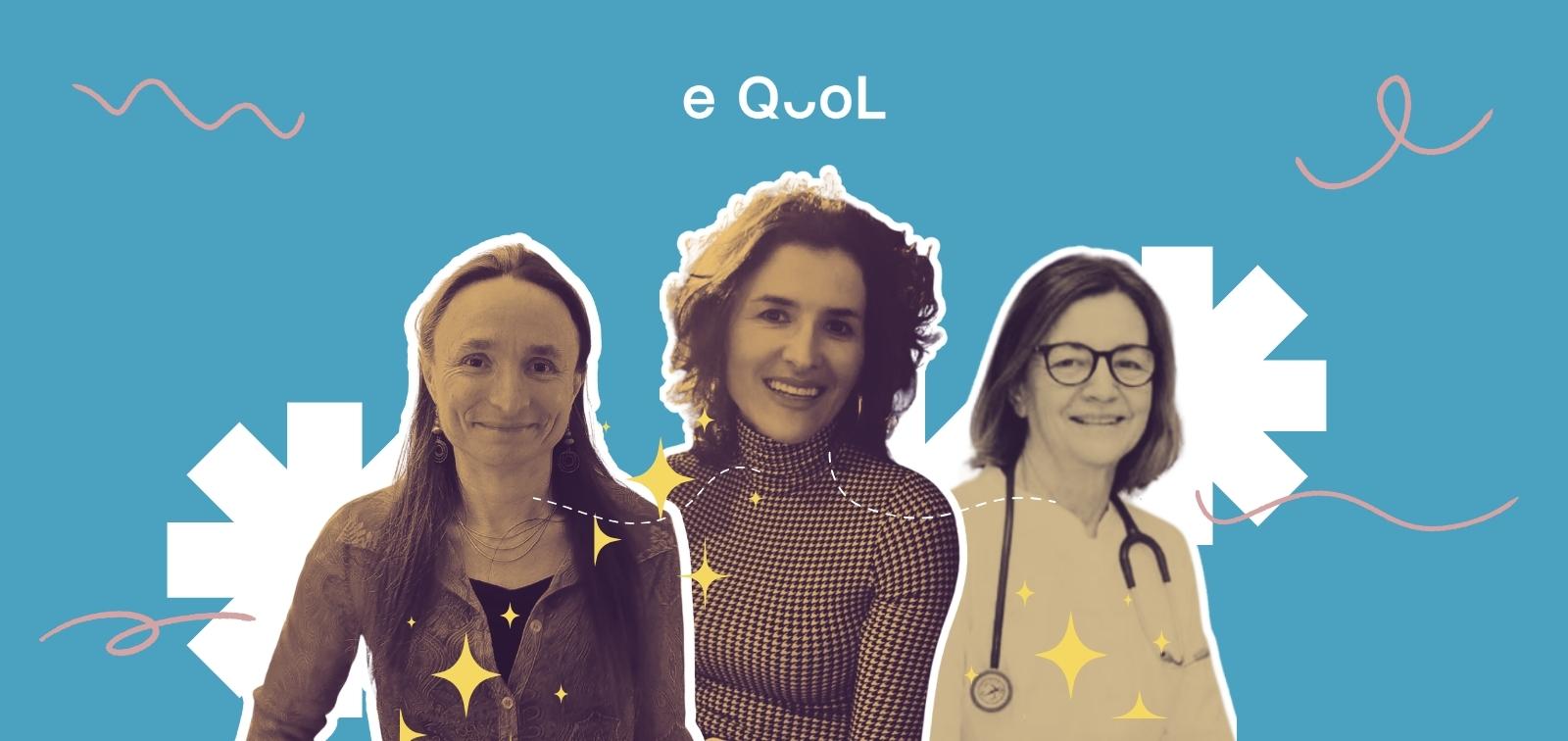
This article is part of the “Healing in Two Voices” series developed within the e-QuoL project, which brings together survivor voices and professional reflections on life after childhood and adolescent cancer. In this series, professional contributions do not aim to add explanations or conclusions. They create spaces for reflection — ethical, psychological, and clinical — opened by the testimonies themselves.
1
In long-term follow-up, I often meet people who were treated years ago and are now considered “well,” yet still carry questions, emotions, or reactions they cannot always explain.
These feelings are not signs of weakness or exaggeration; they are often the trace of experiences lived very early, sometimes without words.
Childhood illness does not affect only one person.
It reshapes family dynamics, roles, silences, and ways of protecting one another — often with the best intentions, but not always with the space for open dialogue.
The following testimony is written by a mother.
You may recognize parts of your own story in it — or none at all. Both are entirely valid.
For some of you, reading a parent’s perspective may help reconnect fragments of a shared history: medical memories, unspoken fears, family silences, and emotions felt today without a clear link to the past.
This kind of narrative can act as a bridge, restoring continuity where the story has long felt incomplete, and opening the possibility of a more fluid understanding within the family — whether spoken aloud or held quietly inside.
For others, it may simply shed light on why certain fears, forms of vigilance, or difficulties in communication persist long after treatment ended.
What is not named in childhood often returns later as tension, anxiety, or unease.
From my perspective as a physician, acknowledging these family traces matters.
Not to reopen wounds, but to recognize that healing after cancer is not only about the body — it is also about finding one’s place within a shared family story, at one’s own pace, and in one’s own way.
Dr Charlotte Demoor-Goldschmidt. Survivorship Medical Doctor expert – Radiotherapy oncologist. CHU Angers, CHU Caen, Inserm U 1018, France
2
My son F. fell ill in the autumn of 2016. On October 26, 2016, he was admitted to the hospital due to swollen lymph nodes in the groin of his right leg. He was three years old.
A week before his admission, while we were playing, I noticed a tiny lymph node. It seemed insignificant. I called our pediatrician, who told me that this was a common occurrence in children. Exactly one week later, while bathing him, I noticed a larger swelling on his leg. I did not know what it was. The pediatrician referred us a Children’s Hospital—first to a surgeon and then to a radiologist for an ultrasound. I hoped the surgeon would say it was something harmless, perhaps a hernia… However, my maternal instinct and intuition filled me with fear and anxiety—a sense that something was seriously wrong. Unfortunately, I was right.
A biopsy of the lymph node indicated the presence of atypical cells and lymphoma, and a bone marrow biopsy ultimately confirmed the diagnosis. I remember the moment when the professor told me that my son had leukemia. That memory is still painfully vivid. She told me everything we could expect—without embellishment. And I appreciated that.
F. was admitted to the ward as a very lively child. He responded well to therapy, and the malignant cells gradually disappeared from his small body. We spent eight months in the hospital, after which treatment continued at home according to the protocol. During that time, I knew everything—the names of the medications, the chemotherapeutic agents, the dosages. Today, most of it has faded from my memory. Stress took its toll. Perhaps it was also a form of self-protection, a way to keep from losing my sanity under the weight of everything we went through.
It was an extremely difficult period—not only for my son, but for the entire family. There were other children on the ward with various malignant diagnoses. You do not suffer only because of your own child, but also because of all the other children and their fates. When things became unbearable, I comforted myself with the thought that there were parents whose situations were even worse. Even today, when I struggle, I think back to those days and feel grateful that my child is well.
The professor in charge of my son was strict with her staff, but that was the only way to maintain order and ensure everything functioned as it should. We could feel in the atmosphere whether the professor was there. And it truly was like that. We parents felt safer when she was present. We were not afraid of unexpected situations or complications. Only those who were there with their children, fearing as we did, can truly understand that feeling. To this day, whenever someone mentions her name, my husband smiles.
I remember the moment she told me she suspected a relapse and that a bone marrow biopsy would be necessary. That was the first time I cried in front of my son. I could not be strong. My entire world collapsed. I remember sitting and staring at the ceiling while waiting for the results. Honestly, nothing could comfort me at that moment—only a good outcome. Fortunately, the relapse was not confirmed.
What a person can go through and survive. I often thought about what I was like in that hospital ward, what kind of mother I was to my child. Like Roberto Benigni in the film Life Is Beautiful. I told F. how lovely it would be in the hospital as we were returning there because of a sudden fever—while at the same time I felt like crying and screaming that I could not go on. There were moments when I truly thought I would lose my mind. For example, when we were kept in the infectious disease ward due to suspected chickenpox. I did not lose my mind.
I believe I feel the consequences of all this even today. Every time F. has a fever without clear symptoms, I feel uneasy. Time does its work, but still… every outburst of his nervousness I connect with possible consequences of the treatment, even though it is most likely puberty. Somewhere I read that out of five children, only one goes through treatment without any lasting consequences. I hope F. will have only minor ones, if any at all, but that will become clear over time as he grows older. That thought frightens me. Especially when I remember what powerful drugs and chemotherapeutic agents passed through his small body. He was only three years old.
After I was told the diagnosis, the first person I called was my sister. I told her, “It will be as it has to be.” And it did turn out well—because that is how it ended. We had a wonderful team of people, led by this professor, which made everything easier. I wanted everything to be explained to me honestly, without sugarcoating. Some parents did not want that; I did. It helped me cope. I believe everyone handles difficult situations in their own way—and that every way is valid.
At the time of F.’s diagnosis, I was 39 years old. When I turned 40, I felt as if I were 70—as though I had already lived an entire lifetime.
Today, I find it hard to have patience for people who dramatize over a sore knee, a shoulder, or a meniscus surgery. It almost seems trivial to me. I am afraid of cancer. Unfortunately.
One day F. came home from school and told me they had reading in Croatian class. I asked how it was, and he said he didn’t like the book (Gumi-gumi or The Girl Who Jumped Over the Heavens) even though everyone else did. When the teacher asked why, he burst into tears. Later, he told me it was about a girl being treated for leukemia who had lost her hair. He didn’t want to talk about it—I had to gently draw the words out of him. I was shaken. Sometimes I hope he no longer remembers his own treatment and everything he went through, but clearly he does.
F. refused to read the text I had written, saying it was too long.
When I asked if that was the real reason, he only smiled.
We understood each other without saying anything.
Tamara, a mother from Croatia
I still remember F.’s mother as a quiet and attentive presence on the ward, fully engaged in her child’s care, observing the smallest details of her son’s condition. She always listened with care, asked thoughtful questions, and absorbed information with remarkable clarity, even in moments of immense stress. There was a subtle strength in her presence that often went unnoticed by others, but those of us who spent time on the ward could feel it constantly.
As medical doctors, we are trained to focus on diagnoses, protocols, and treatment outcomes, yet parents like her remind us that every medical journey is also deeply human and profoundly relational. Her story, and the quiet strength with which she carried it, will remain with me. It is a reminder that every encounter on the ward, every conversation, and every shared moment holds the power to shape the experience of care.
Today, I am happy to know that F. is a healthy boy who enjoys life to the fullest. Stories like this are the reason we do what we do as clinicians, but they also remind us how fragile the balance between fear and hope truly is. They teach us that healing does not come only from treatment, but also from trust, honest communication, and the willingness to truly listen. Only when these two voices are heard together can care become more meaningful and truly whole.
Prof. Jelena Roganovic. Pediatric oncologist – Children’s Hospital Zagreb, Croatia
We did not live the illness in the same way: a young patient still growing up and their adult caregiver parents did not travel the same path.
When treatment ends, time is needed for the whole family to settle again into a more ordinary life — and to rediscover its flavor, which will likely feel very different from what it was before the illness. Each person will go through this at their own pace.
If silence takes hold, it is often more out of modesty than from a desire to hide or suppress what happened: we do not want to hurt the other by bringing painful events back to the surface. We keep our worries and questions to ourselves, hoping for forgetting… We may feel vaguely — or deeply — guilty about something that is not always clear, even though reason tells us we are not to blame.
When dialogue does open, it can sometimes feel unsatisfying: we did not travel the same road, and each experience contains something that cannot be put into words. That is frustrating. It becomes even harder when expectations and needs exist on both sides.
When the association Les Aguerris organized an evening discussion for parents of former patients, many parents attended, and some former patients as well — but only one former patient came with their own parent. That alone shows how sensitive the subject is for everyone, even when the desire to understand is present.
This is where peer support can be extremely helpful: a space where understanding does not always require words, because we share the same lived experience. Among former patients, we can lay down certain things that would feel too heavy to share within our families.
Our parents also need this space — and the support of their peers.
Useful resources for caregivers and support materials can also be found on the PanCare website.

 Schweizerische Eidgenossenschaft