
News
A Dialogue between Caregivers: Silence and Reappropriation, Becoming a Subject Again
24/02/2026
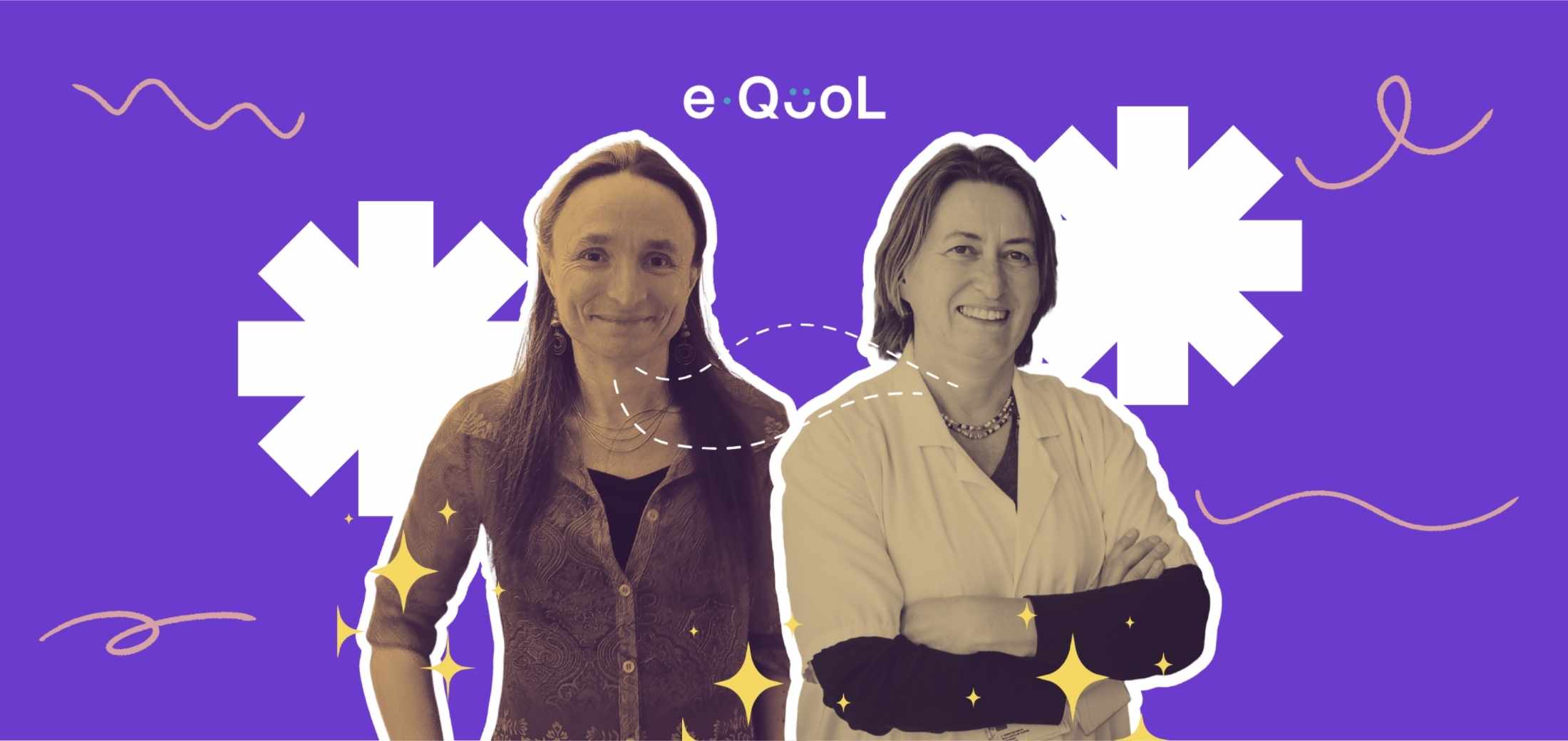
This article is part of the “Healing in Two Voices” series developed within the e-QuoL project, which brings together survivor voices and professional reflections on life after childhood and adolescent cancer. In this series, professional contributions do not aim to add explanations or conclusions. They create spaces for reflection — ethical, psychological, and clinical — opened by the testimonies themselves.
1
“After treatment ended, I felt invisible — as if I was moving through my own life without fully inhabiting it.”
Some words come back years later.
They appear in follow-up consultations, in conversations with survivors, or in the support spaces held by parent and survivor associations. They are often brief, sometimes hesitant, and rarely formulated as a complaint.
“Having cancer at four years old makes no sense. At the time, the trauma was much stronger for my parents than for me, because I didn’t understand anything.”
“I didn’t really understand what was happening. Decisions were made, and I followed.”
“It’s as if it happened to my body, but not really to me.”
“I was no longer a patient, but I didn’t yet feel like a person again.”
“Sometimes I wonder who I would be if I hadn’t been ill.”
“Everyone thinks I should be doing well now.”
Taken together, these fragments sketch an experience in which the body becomes central, while words, consent, and subjectivity remain peripheral.
Within the Healing in Two Voices series, professional contributions do not aim to interpret or conclude survivor narratives. They seek to open spaces for ethical, psychological, and clinical reflection — spaces made necessary by the testimonies themselves.
The following testimony offers such a reflection, focusing on silence, objectification, and the long process of reclaiming the body after childhood cancer. It draws attention to the specific vulnerability of children and adolescents, and to the responsibility of care systems to preserve subjectivity, consent, and protection throughout survivorship
Dr Charlotte Demoor-Goldschmidt. Survivorship Medical Doctor expert – Radiotherapy oncologist. CHU Angers, CHU Caen, Inserm U 1018, France
2
What strikes us about these testimonies in this series is this notion of silence, followed by slow reappropriation.
Firstly, there is the silence of a child who remains quiet because he doesn’t really understand what is happening to him. The words are spoken, but what is going on inside him? What are these inner movements that he can’t understand but experience with turmoil? The “grown-ups” seem to understand… so the child follows and finally accepts, in silence, while inside everything is chaos and fury of a body that struggles and betrays. This silence contributes to their reification. From subject, he becomes then an object:
- Object of concern for their parents
- Object of compassion for those around them
- Object of care for medical caregivers
- Object of observation for the medical team
- Object of study for protocols
Thus, this objectification, of which we, medical caregivers, are not always aware, removes all value from speech and opposition. No matter how strongly the child opposes the medical decision or treatment, he can’t be heard. While the caregiver can look forward to a future of better health, the child lives in the here and now. This difference in time frames leads to the ethical dilemma of the child’s autonomy to consent and his free choice. There is no clear-cut answer to this dilemma.
So the child will gradually abandon their body, detach himself from it and lose confidence in the power of their opposition.
During this delicate period of development that is childhood, as well as adolescence, cancer disrupts the process of self-discovery, the quest for independence and the sense of belonging to oneself rather than to others.
Consequently, one of the challenges after cancer is this reappropriation of the body, of becoming a subject again rather than an object. It is a long process of unlearning. It is the acceptance of a body that has changed, in which one must regain confidence. Having confidence in oneself, both physically and psychologically, in order to be able to trust the gaze of others.
Firstly, it means reclaiming a physical shell that needs to be rebuilt, defining the limits of one’s body and respecting its integrity. It then means reclaiming an identity as a non-sick person, as a being of opposition, in order to be heard and respected in one’s autonomy.
Finally, it means regaining one’s place in humanity, as in child protection.
Without this work of reappropriation, there is a risk of persisting in this detachment from one’s body, of always perceiving it as an object, and of not believing in one’s ability to say no and be heard. This vulnerability can lead to risky behaviour and the acceptance of violence as a continuum during the cancer period.

 Schweizerische Eidgenossenschaft